
Everyone seems to have a side hustle these days, or at least an idea for one. Maybe you’ve considered freelancing, selling products online, or turning a skill you’ve spent years developing into an additional source of income. With the cost of living continuing to put pressure on household budgets, it’s easy to understand the appeal. Still, figuring out how to start a side hustle that actually makes money can feel overwhelming when you’re already juggling a full-time job and everything else life throws your way.
The truth is, plenty of side hustles sound promising on paper but end up costing more time and money than they’re worth. Before you invest in equipment, build a website, or spend your evenings chasing potential customers, you need to know whether there’s genuine demand for what you’re offering. Understanding how to start a side hustle means looking beyond the initial excitement and thinking seriously about startup costs, pricing, profitability, and how you’ll find people willing to pay for your products or services.
Fortunately, you don’t need a groundbreaking business idea or thousands of dollars to get started. Some of the most practical opportunities involve skills you already have, problems people need solved, and services businesses are willing to pay for. Whether you’re hoping to earn a few hundred extra dollars each month or eventually build something substantial, we’ll walk through how to start a side hustle with realistic expectations, a manageable budget, and a plan for turning your efforts into actual income.
How Do You Start a Side Hustle With Little or No Money?

You don’t need thousands of dollars in savings, expensive equipment, or a complicated business plan to start earning extra income. In fact, some of the most accessible side hustles involve providing services that people and businesses already need. If you’re researching how to start a side hustle on a limited budget, the smartest approach is to keep your initial expenses low and focus on finding customers before making significant investments.
Start With Skills and Resources You Already Have
Before searching for a completely new business idea, think about what you’re already good at. Maybe you’re an excellent writer, have experience managing spreadsheets, or know your way around social media. Those skills could translate into freelance writing, administrative support, bookkeeping, or content management services.
Your existing resources matter, too. If you already own a reliable laptop and have internet access, you may have most of what you need to begin offering certain professional services. Someone who’s particularly organized might help small business owners manage appointments and email correspondence, while a person with design experience could create marketing materials for local companies.
Consider the tasks friends, family members, or coworkers regularly ask you to help with. Sometimes, those requests reveal skills that other people would gladly pay for.
Choose a Business Model That Doesn’t Require Much Upfront Investment
Service businesses are often among the least expensive side hustles to launch because you’re primarily selling your time and expertise. Unlike businesses that require physical inventory, you generally won’t need to purchase products before making your first sale.
Freelancing, tutoring, virtual assistance, and certain consulting services are worth exploring if you want to minimize startup costs. However, expenses can still include software subscriptions, business registration fees, insurance, and equipment, depending on the work involved.
Digital products are another possibility, particularly if you enjoy creating templates, planners, or educational resources. Just remember that developing something once doesn’t guarantee ongoing sales. You’ll still need a way to reach customers who are interested in purchasing it.
Test Your Idea Before Spending Money on It
One of the biggest mistakes aspiring entrepreneurs make is investing heavily in a business before confirming that anyone wants what they’re selling.
Suppose you’re considering offering social media management services. Rather than immediately purchasing premium software and building an elaborate website, start by researching local businesses that might benefit from your expertise. Reach out to a few potential customers, explain what you can offer, and see whether anyone is interested in paying for a specific service.
10 Side Hustle Ideas That Have Real Earning Potential
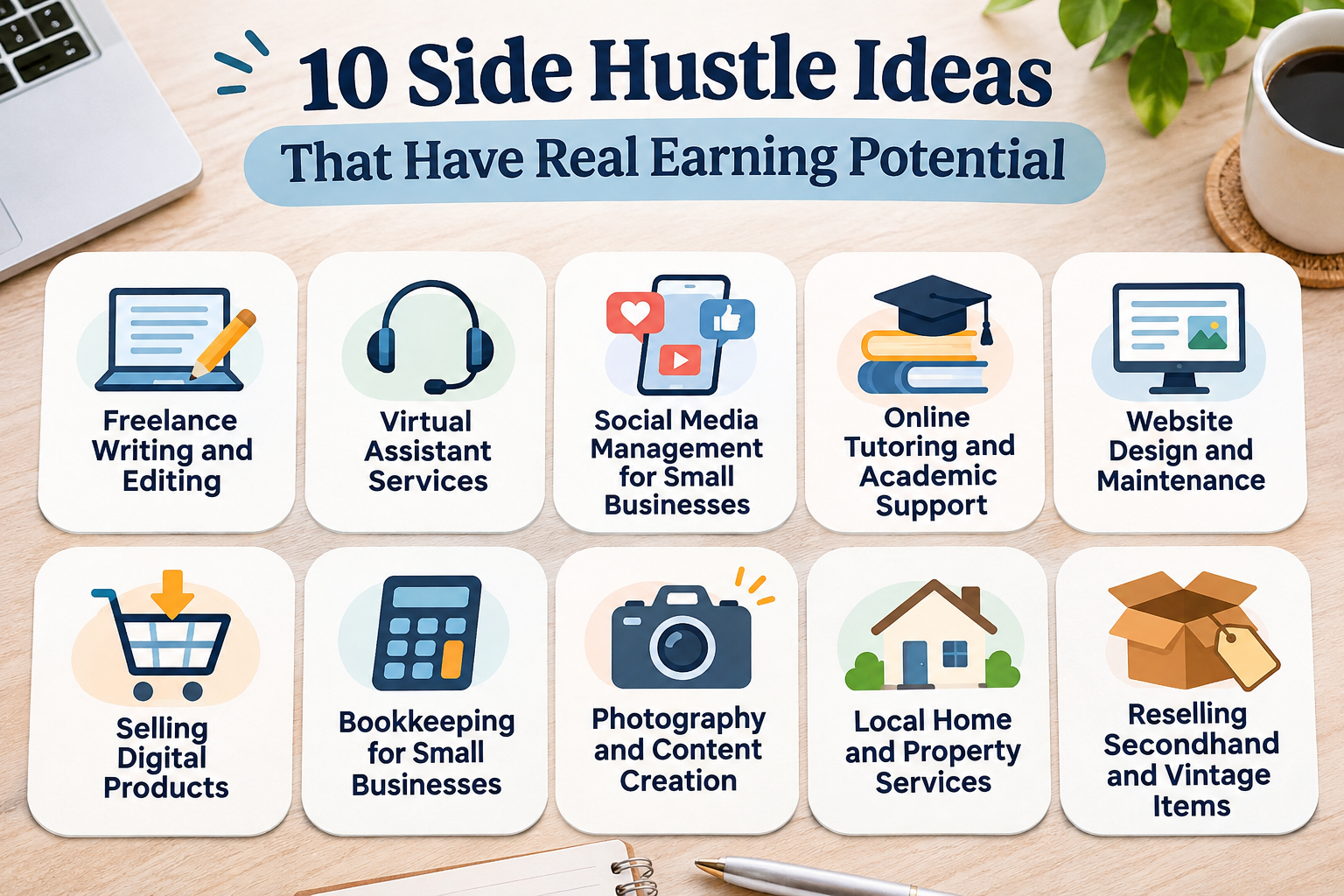
If you’re wondering how to start a side hustle that generates meaningful income, consider opportunities where customers have an identifiable need and a reason to pay for your help. The following ideas offer different ways to turn existing skills, knowledge, or resources into a business:
1. Freelance Writing and Editing
Businesses need written content for websites, newsletters, marketing campaigns, and customer communications. If you’re a strong writer with a good understanding of grammar and audience expectations, freelance writing or editing could be a practical place to start.
You might specialize in blog articles, website copy, email marketing, or proofreading business documents. Some clients prefer paying per project, while others hire freelancers on an ongoing basis.
A portfolio featuring a few relevant writing samples can help demonstrate your abilities, even if you haven’t worked with paying clients yet. You’ll also want to establish clear expectations around revisions, deadlines, and the amount of research involved. A project that appears profitable initially can become much less appealing if it requires hours of unpaid changes.
2. Virtual Assistant Services
Running a business involves plenty of administrative work, and not every entrepreneur has the time or budget to hire a permanent employee. That’s where virtual assistants come in.
Virtual assistants may manage calendars, organize documents, respond to routine emails, prepare presentations, or handle customer inquiries. Depending on your experience, you could also offer specialized support with project management software or customer relationship management systems.
For your first clients, consider small business owners, consultants, and independent professionals who need a few hours of support each week. Recurring arrangements can make income more predictable, provided you’re charging enough to cover your time and expenses.
Related: How to Separate Personal and Business Finances (And Why It Matters)
3. Social Media Management for Small Businesses
Plenty of business owners understand that social media matters but struggle to find time to maintain their accounts. If you have experience creating content, writing captions, or analyzing engagement, you could offer social media management services.
Rather than offering every possible marketing service, consider specializing in a specific industry or platform. A local restaurant, for example, may have very different content needs from a professional services company.
Be realistic about what you can deliver, particularly when clients expect measurable business results. Social media engagement doesn’t automatically translate into sales, and promising dramatic growth can create unrealistic expectations.
Related: How to Make Money with AI Side Hustles
4. Online Tutoring and Academic Support
If you’re knowledgeable in a particular academic subject, online tutoring offers an opportunity to help students while earning additional income! Mathematics, science, foreign languages, and standardized test preparation are common areas of demand. Tutoring can also fit around a traditional work schedule because many students need assistance during evenings and weekends. However, preparation time, scheduling changes, and cancellations can affect your actual earnings.
5. Website Design and Maintenance
Small businesses frequently need help creating websites, updating existing pages, and keeping their online information accurate. If you’re familiar with WordPress, website builders, or basic web design principles, this could become a valuable freelance service! You don’t necessarily need to develop complex websites from scratch. Some clients simply want someone to update their service pages, improve navigation, upload new content, or troubleshoot basic issues.
Website maintenance can also create opportunities for recurring income. A business might pay for monthly updates, routine content changes, or ongoing support after its initial website is complete.
Related: How to Build a Business Website Without Hiring a Developer or Spending a Fortune
6. Selling Digital Products
Digital products appeal to entrepreneurs because they don’t require physical inventory or shipping. Once you’ve created a product, you may be able to sell copies repeatedly without reproducing it each time. This might look like selling budgeting spreadsheets, printable planners, business templates, digital invitations, and educational worksheets.
You’ll need to consider marketplace fees, payment processing costs, customer support, and the time spent developing and marketing your products. Digital sales can become a worthwhile income source, but visibility and customer demand are essential.
7. Bookkeeping for Small Businesses
If you’re comfortable working with numbers and have relevant accounting knowledge, bookkeeping could be worth exploring as a side hustle. Services might include categorizing transactions, reconciling bank statements, organizing receipts, and preparing routine financial reports.
This type of work requires accuracy, confidentiality, and a clear understanding of basic accounting principles. Familiarity with commonly used bookkeeping software can also make you more attractive to potential clients.
It’s important to distinguish bookkeeping from services that require additional professional qualifications. Tax representation, auditing, and certain accounting services may involve licensing or other legal requirements. Make sure you understand what you’re qualified and legally permitted to offer.
8. Photography and Content Creation
Photography can be a promising side hustle for someone who already owns a capable camera and enjoys working with people or businesses. Family portraits, graduation photos, professional headshots, and product photography are all potential services. You could also create visual content for local businesses that need photographs for their websites or social media accounts.
The challenge is accounting for everything that happens outside the actual photo session. Editing, communicating with clients, traveling, and delivering finished images can take considerably longer than the time spent taking pictures.
Related: Should I Start My Own Business? Signs You’re Ready to Be Your Own Boss
9. Local Home and Property Services
Lawn care, basic yard cleanup, house cleaning, pet sitting, and seasonal property maintenance are examples of services that may attract local customers. These businesses can benefit from referrals because satisfied customers often recommend reliable service providers to neighbors and friends. Depending on the service, repeat appointments may also provide more consistent income than occasional projects.
Before getting started, account for transportation, supplies, insurance, and any local licensing requirements. Avoid offering work that requires specialized credentials or creates safety risks beyond your training.
10. Reselling Secondhand and Vintage Items
If you enjoy browsing thrift stores, estate sales, or online marketplaces, reselling could turn that interest into an additional income stream! The basic idea is to purchase items at a price that leaves room for profit when you resell them. Clothing, furniture, collectibles, books, and vintage home accessories are potential categories, although demand varies considerably.
Successful reselling requires more than finding something inexpensive. You’ll need to research comparable sold listings, evaluate an item’s condition, and understand what buyers are actually willing to pay.
Shipping costs, marketplace fees, returns, storage, and unsold inventory can quickly reduce your earnings, so definitely start with a small number of items, preferably in a category you understand, before committing significant money to inventory.
Related: The Best Side Income Ideas During the Winter
How Can You Tell Whether a Side Hustle Will Actually Make Money?

A side hustle can bring in hundreds of dollars in sales and still leave you with very little profit, if any. This is why understanding the numbers matters just as much as choosing an appealing business idea. Before investing significant time or money, evaluate customer demand, expected expenses, realistic pricing, and the amount of work required to deliver your product or service.
Find Out Whether People Are Already Paying for Similar Services
One of the simplest ways to evaluate a business idea is to look for evidence that customers are already spending money on something similar. Search freelance marketplaces, local business directories, and relevant online communities to understand which services are being offered. For physical products, examine completed sales rather than relying entirely on advertised prices. A listing price tells you what a seller hopes to earn, while a completed sale provides stronger evidence of what a buyer was willing to pay.
Calculate Your Startup Costs and Ongoing Expenses
Before launching, you’ll want to write down everything you’ll need to spend money on. This includes obvious purchases, such as equipment and supplies, along with less visible expenses like software subscriptions, platform fees, payment processing, transportation, and insurance. Separate your expenses into two different categories:
- Startup costs, which are the initial purchases or fees required to begin operating.
- Ongoing expenses, which are the costs you’ll continue paying as you run the business.
For example, someone starting a freelance editing business might already own a laptop but need to pay for editing software and a business website. A person offering lawn care services may face much higher equipment, fuel, and maintenance expenses.
Remember that taxes also affect how much income you ultimately keep! In the United States, self-employment income may be subject to income tax and self-employment tax, depending on your circumstances. Keeping accurate records from the beginning makes it easier to understand your financial position and prepare for tax obligations, of which there can be many!
Related: 2026 Taxes for Self-Employed Workers: What to Know
Figure Out How Much You Need to Charge to Make a Profit
Pricing is where many new entrepreneurs struggle, and that’s nothing to be ashamed of. Charging less than established competitors might seem like an easy way to attract customers, but it can leave you working long hours for very little money, which is never fun.
Start by estimating the expenses associated with delivering your service, then determine how much you want to earn for the time involved, but don’t forget to be realistic.
Imagine you charge $200 for a freelance project. If you spend $20 on expenses directly associated with the work, you have $180 remaining before accounting for taxes and other business costs. If the project takes six hours, that’s $30 per hour before those additional obligations. Now, consider what happens if the client requests extensive revisions and the project takes ten hours instead. Your earnings drop to $18 per hour before taxes and other overhead, even though the amount the client paid hasn’t actually changed.
Consider How Much Time Each Sale or Project Requires
Your time is one of the most important costs in any side hustle, even when you’re not paying yourself a formal wage!
A service that earns $100 for two hours of work may look better than one that earns $150 for an entire day. However, you also need to account for finding customers, preparing materials, answering questions, handling administrative tasks, and completing any follow-up work.
Consider a photographer who charges $250 for a portrait session. The appointment itself might last an hour, but editing photographs, communicating with the client, and traveling could add another four hours. If the photographer also spends $25 on direct expenses, the remaining $225 represents $45 per hour across five hours of work, before taxes and other overhead.
Tracking your actual hours over several projects can help you identify which services are worth continuing and where your pricing may need adjustment.
Ultimately, the goal is to build a side hustle that makes financial sense for your circumstances. A smaller business with reliable customers, manageable expenses, and healthy profit margins may be far more valuable than an operation that generates impressive sales figures but consumes nearly all your free time.
Related: Best Side Hustles for Professionals in 2026
How to Start a Side Hustle — And Keep It Going

Starting a side hustle can be a really exciting way to earn additional income, develop valuable skills, and explore opportunities outside your regular job. If you’re serious about learning how to start a side hustle, focus on finding your first paying customer before worrying about making everything perfect! Track your expenses, be realistic about how much time you can commit, and give yourself room to adjust as you learn what works.
You might discover that your original idea needs a few changes, or that a relatively simple service has more earning potential than you expected. Either way, building a profitable side hustle takes patience and a willingness to treat your efforts like a real business. With the right foundation, that extra source of income could eventually become something much bigger than you initially imagined!
Read Next: ETF Investing for Beginners: How to Start Building Wealth With ETFs
We hope you love the products we recommend! Just so you know, Talk District may collect a share of sales or other compensation from the links on this page.