
Finding the right person for an open position can be frustrating, especially when you’re sorting through dozens of applications from candidates who don’t quite meet your needs. You might have an excellent opportunity to offer, but if your job listing doesn’t communicate what you’re looking for, the right applicants could scroll right past it. Understanding how to write a job posting can make a significant difference in the quality of applications you receive and the time you spend trying to fill a position.
A great job posting should give candidates a clear picture of the role, the responsibilities involved, and what it’s actually like to work for your company. That means choosing an accurate job title, explaining your expectations, and including details about compensation, benefits, and workplace culture. When you’re learning how to write a job posting, it’s also important to consider what potential applicants want to know before deciding whether an opportunity is worth pursuing.
Whether you’re a small business owner hiring your first employee or a hiring manager looking to improve your recruitment process, a few thoughtful changes can help you attract more qualified candidates. From writing compelling job descriptions to avoiding common recruitment mistakes, we’re breaking down how to write a job posting that reaches the right people and encourages them to apply.
How to Write a Job Posting in 5 Easy Steps
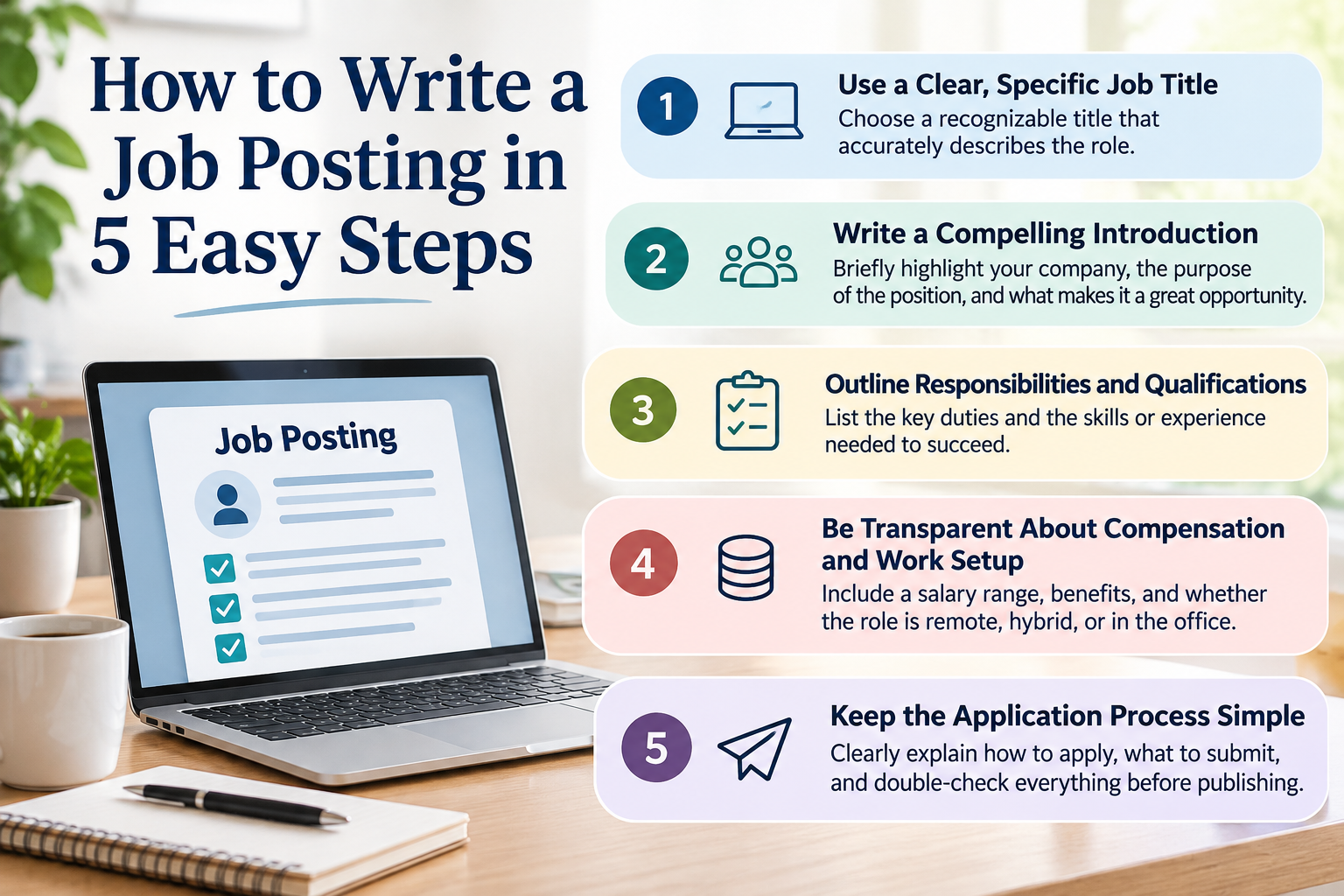
If you’re wondering how to write a job posting that attracts qualified candidates, these five steps will help you create a listing that’s clear, informative, and appealing to the people you’d actually want to hire!
Step 1: Start With a Clear, Specific Job Title
Your job title is pretty much the first thing potential candidates see, so make sure it accurately describes the position. Titles like “Marketing Rockstar” or “Customer Service Ninja” might sound fun and unique, but they don’t tell potential applicants anything. Also, they’re less likely to match the terms people use when searching for roles. Stick with recognizable titles such as “Digital Marketing Manager,” “Administrative Assistant,” or “Senior Accountant.” If the position requires a particular specialization, include that information when it’s relevant. For example, “Content Marketing Manager” gives candidates a clearer understanding of the role than just “Marketing Manager.”
Pro Tip: Keep the title focused on the position itself. Details about salary, benefits, and company culture belong elsewhere in the listing.
Related: How to Hire Seasonal Employees This Quarter
Step 2: Write an Introduction That Makes Candidates Want to Apply
Once you’ve caught someone’s attention with the job title, give them a reason to keep reading! A strong opening should succinctly introduce your company, explain the purpose of the position, and help applicants understand what makes the opportunity compelling.
Candidates are usually more interested in what they’ll be doing and how their work will contribute to the business. For example, instead of writing, “We’re seeking a motivated individual to join our dynamic marketing department,” you could say, “We’re looking for a content strategist to help shape our editorial direction, improve organic search performance, and develop content that reaches new audiences.”
The second example immediately tells applicants what kind of work they’ll be responsible for. It also gives experienced candidates a better idea of whether their skills align with the position.
Step 3: Explain the Responsibilities and Required Qualifications
This is where your job posting has to get more specific. Candidates should be able to read the description and understand what a typical workday might involve, which responsibilities they’ll own, and what experience they’ll need to succeed.
- Start with the most important duties. If you’re hiring a social media manager, for instance, you might mention developing content calendars, managing brand accounts, analyzing campaign performance, and coordinating with creative teams.
- Be equally thoughtful about the qualifications you include! There’s a difference between skills someone absolutely needs on their first day and abilities they could develop with training.
Requiring five years of experience for an entry-level position or demanding proficiency in software that employees rarely use can discourage otherwise capable applicants. Consider separating essential qualifications from preferred skills so candidates can evaluate their fit a bit more accurately.
Related: How to Update Your Resume for a Fall Job Search
Step 4: Be Transparent About Salary, Benefits, and Working Arrangements
Obviously, compensation is an important part of the decision to apply for a job, yet some employers still leave it out of their listings. Including a real salary range gives candidates a better understanding of whether the opportunity meets their financial expectations and can reduce time spent interviewing applicants whose compensation needs don’t align with your budget.
Be specific about the benefits you’re offering. Health insurance, retirement contributions, paid time off, professional development opportunities, and flexible schedules can all influence someone’s decision to apply.
Remember that salary disclosure requirements vary by location, so review the laws that apply to the position before publishing your listing.
Step 5: Make the Application Process Simple and Review Before Publishing
You’ve written a compelling description, outlined your expectations, and explained what candidates can expect in return — now make sure the actual process of applying for the position isn’t complex.
Tell applicants exactly what they need to submit, whether that’s a resume, portfolio, writing sample, or another relevant document. If your hiring process includes multiple interviews or assessments, a brief explanation can help candidates know what to expect.
Avoid requesting information that isn’t necessary at the initial application stage. Someone who’s already uploaded a resume probably doesn’t want to spend another 30 minutes manually entering the same employment history. Easy Apply options like the one LinkedIn offers can be a good way to streamline the application process.
Before publishing, read the entire posting from a candidate’s perspective. Check for spelling mistakes, confusing requirements, inconsistent details, and language that could unintentionally discourage qualified applicants. Make sure the application link works, too.
Finally, consider where you’re publishing the opening. Your company website, relevant industry job boards, and professional networking platforms may reach different audiences, so choose the channels most likely to connect you with solid candidates.
Related: What to Wear to a Job Interview in 2026: A Complete Guide for Men and Women
Job Posting Checklist: What to Include Before You Hit Publish
Before posting your next job opening, take a few minutes to review the details. A clear, complete listing can help you attract qualified candidates, answer common applicant questions, and avoid unnecessary confusion during the hiring process. Here’s a checklist that can be helpful when wondering how to write a job posting:
Your Job Posting Checklist
-
Use a clear, recognizable job title that accurately describes the position.
-
Introduce your company and briefly explain what the role contributes to the business.
-
List the most important responsibilities and everyday duties.
-
Separate required qualifications from preferred skills and experience.
-
Include an accurate salary range and relevant employee benefits.
-
Specify whether the position is remote, hybrid, or based in an office.
-
Clarify the work schedule, employment type, and any location requirements.
-
Give candidates a realistic understanding of your company culture.
-
Use straightforward, inclusive language without unnecessary jargon.
-
Explain how to apply and which documents candidates need to submit.
-
Check that the application link works and the submission process is straightforward.
-
Proofread the listing for spelling errors, unclear expectations, and outdated information.
-
Review applicable employment and pay transparency requirements.
-
Publish the opening on platforms where qualified candidates are likely to search.
A final review might only take a few minutes, but it can save a ton of time once applications start rolling in!
Related: Employee Appreciation Ideas That Don’t Feel Like an Afterthought
What Makes a Job Posting Stand Out to Qualified Candidates?
Qualified candidates usually have several opportunities to consider, particularly when their skills are in high demand. A job posting that simply lists responsibilities and requirements might explain the position, but it doesn’t necessarily give someone a really compelling reason to apply. The most effective job postings help applicants understand what they could accomplish, what their working environment would look like, and whether the opportunity aligns with their professional goals.
1. Show Candidates What Makes the Opportunity Worth Considering
Think about what someone would gain from accepting the position beyond their regular paycheck. Would they have the opportunity to lead important projects, learn new skills, or take on greater responsibilities as the company grows? Those details can make a position considerably more appealing, especially to experienced professionals who are weighing multiple offers.
A marketing specialist might be particularly interested in helping launch a new product, while an accountant could appreciate the opportunity to improve financial reporting processes or work directly with company leadership.
You don’t need to promise rapid promotions or extraordinary career growth to make a position attractive to qualified candidates. Sometimes, the opportunity to take ownership of meaningful work or develop expertise in a particular area is enough to catch someone’s attention.
2. Give Applicants a Realistic Picture of Your Company Culture
Nearly every employer wants to describe their workplace as collaborative, supportive, and welcoming. Instead of copying that strategy, we recommend that you share a few specific details about how your team operates. Does everyone work independently with regular opportunities to collaborate? Are employees encouraged to contribute ideas during planning meetings? How does management typically provide feedback, and what does communication look like between departments?
For example, a small business might explain that employees work directly with the owner and have considerable input into everyday decisions. A larger organization could highlight its structured training programs or opportunities to collaborate across departments.
Also, don’t forget to be transparent about expectations that might influence someone’s decision. If the position involves frequent client meetings, occasional weekend work, or a particularly busy season, applicants should understand that before accepting an offer.
3. Write for the Candidates You Actually Want to Attract
A recent graduate looking for their first professional opportunity probably won’t evaluate a job posting the same way an experienced department director would. Their priorities, concerns, and expectations may be quite different, which is worth considering when deciding what information deserves the most attention.
For an entry-level position, applicants may be particularly interested in training, mentorship, and opportunities to build practical experience. Someone applying for a senior leadership role, meanwhile, might want to understand the company’s strategic direction, the authority they’ll have to make decisions, and the resources available to their department.
Specialized positions require a little more consideration. If you’re recruiting a software developer, for example, details about the technologies they’ll use and the problems they’ll help solve may be more valuable than a lengthy description of office perks.
You ultimately want to figure out what matters to the professionals you’re hoping to reach while keeping the description accurate and accessible. You can emphasize relevant aspects of the opportunity without making assumptions about candidates based on their age, background, or personal circumstances.
A good way to approach this is to ask your current employees what attracted them to their positions and what they enjoy most about their work. Their answers may reveal some great aspects of the company that aren’t immediately obvious to someone writing a job advertisement. Need some extra help with how to write a job posting that attracts the right candidates? We’ve got your back.
Related: Interview Questions That Actually Reveal Candidate Quality
How to Write a Job Posting That Actually Gets You the Right Candidates

A great job posting can make the hiring process way easier for you. Including clear responsibilities, realistic qualifications, transparent compensation details, and an accurate description of your workplace can help attract candidates who understand the position and can add a ton of value to your team.
Learning how to write a job posting also means looking at the opportunity from a candidate’s perspective. Would someone unfamiliar with your company understand what the job involves? Are your expectations reasonable, and have you explained what makes the position worth considering? Taking the time to answer those questions can improve your recruitment efforts and help you avoid sorting through applications from people who aren’t suited to the role!
Before publishing your next opening, give your job description one final review and make sure every detail serves a purpose! A little extra attention during the writing process could save you hours of work later…and bring you closer to finding the perfect person for your team!
Read Next: How to Start a Side Hustle That Actually Makes Real Money
We hope you love the products we recommend! Just so you know, Talk District may collect a share of sales or other compensation from the links on this page.