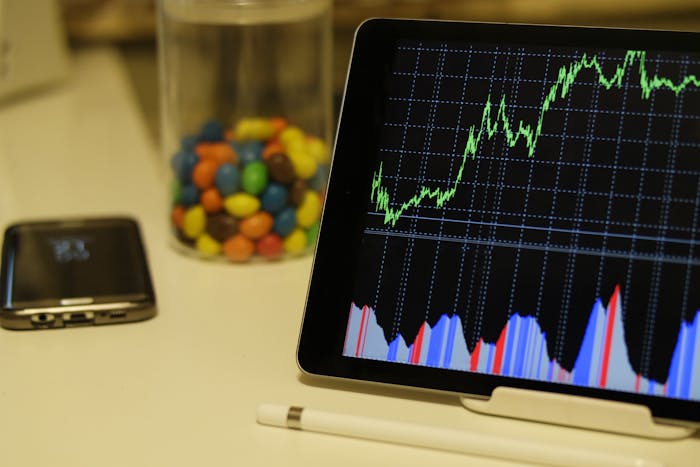
What is derivatives trading? Although it’s become an integral part of the financial market, derivative trading can be a very complicated topic. However, it’s an important instrument to know especially if you’re looking to make significant investments in your financial portfolio.
While it does have its advantages, it doesn’t come without its complexities. Before you start trading derivatives, it’s crucial for you to know the inherit risks that are involved. It can be very easy to lose money on your investments if you aren’t informed about the market.
In this article, we’ll discuss the advantages and disadvantages of derivatives trading. That way, you’ll be better prepared to manage your investments wisely!
What Is Derivatives Trading?
Before we talk about derivative trading, let’s take a step back and discuss derivatives as a whole. A derivative is a financial contract whose price is based on an underlying asset, group of assets, or benchmark.
Here is a list of the most common types of derivatives to trade:
- Futures: a contract to buy or sell an asset at a future date
- Options: the ability to buy or sell a stock at the strike price (no obligation)
- Forwards: contracts that don’t trade on an open exchange-traded
- Swaps: the ability to exchange financial instruments with another party
Because these prices can fluctuate, derivative trading allows investors and businesses to mitigate risks associated with these price changes. This would allow them to buy or sell their assets at some point in the future, as long as the contract is still active.
Derivative trading can be a valuable financial tool for both businesses and individuals. However, it must involve at least two or more parties. It can be traded as an exchange or over-the-counter (via a broker-dealer network like the stock exchange).
Pros of Derivative Trading
Hedging
Hedging is a method to reduce the risk of an investment by taking an opposite position. Shorting a stock or exchange-traded fund (ETF) are common way to mitigate your hedging risks. However, investors who don’t want to short-sell can also purchase inverse ETFs.
Businesses often hedge as a form of derivative trading, but individuals can do so as well. For example, you might want to do this if your stock is overpriced.
Leverage
Derivative trading can also help you control large positions with just a small amount of capital or investment. So if your asset has a favorable price movement, you’ll see a much larger return compared to investing directly.
While there is potential for amplified returns, the same leverage applies to losses as well. If the market moves against your position, it could result in a major loss, which may be too high of a risk for many traders.
Ease of Trading

Generally speaking, derivatives are highly liquid. It’s easy to buy and sell assets when you want without significantly impacting the market price, as there are low transaction costs. Contracts are also flexible and can also be customized to your specific needs (setting specific strike prices, choosing expiration dates, etc).
As a trader, this also means you can easily diversify your portfolio. It’s common to have access to a variety of different assets to spread your risk across multiple investments.
If you are interested in derivatives trading, then it’s very important to work with a reputable trading platform. That way, you’ll be equipped with the support and tools necessary to make informed decisions on your investments.
Cons of Derivative Trading
High Risk
Derivative trading is highly speculative and, therefore, risky by nature. As we discussed earlier, leverage can help you amplify your returns. But on the other hand, any small adverse movement could also magnify your losses.
This is because markets can be highly volatile. There are several different factors that contribute to this, including politics, economic data, and market changes. Because everything is unpredictable, even small movements can be extremely risky.
Counterparty Risk
Additionally, there is a risk with over-the-counter derivatives for the counterparty to default on the contract. These contracts are unregulated. So if one party is unable to fulfill the required obligation, the other party may face financial loss.
This is different than contracts that are traded on the exchanges. Futures are legally binding contracts that require both parties to fulfill the terms at the time of expiration. As a result, they tend to be less risky since they are exchanged in a more regulated environment.
Time Restricted

As with most contracts, derivatives do expire on a certain date. If the market does not move during this time period, it could be a worthless investment. Having this time pressure can also force traders into making hasty decisions that may not be based on accurate analysis. This is especially true for inexperienced traders.
Complexity
If you’re having trouble understanding derivatives – you’re not alone! This is a very complex topic and requires a deep understanding of the market and different trading strategies.
Unlike crypto trading, it may not be a viable option for inexperienced traders. Without fully understanding the risks at hand, it can be difficult to calculate prices and risks, which can lead to significant financial losses.
However, there are ways to learn more about derivatives trading and its intricacies. You can take an online course to learn about the different derivatives or stock trading in general.
Now if someone asks you, “What is Derivatives Trading?”, you should be able to explain the pros and cons. While it can be more complex than buying stock options or dealing with debt management, it can be a powerful addition to your portfolio. And if you’re just starting to learn about investments, then check out our beginner’s guide to investing with stocks. The more you know about the financial market, the better equipped you’ll be to make well-informed decisions!
We hope you love the products we recommend! Just so you know, Talk District may collect a share of sales or other compensation from the links on this page.